Archives

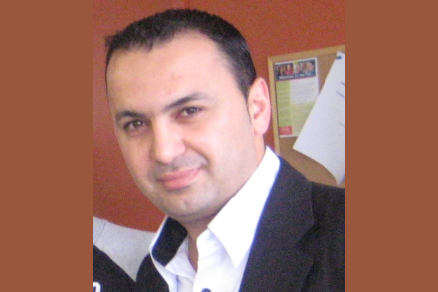
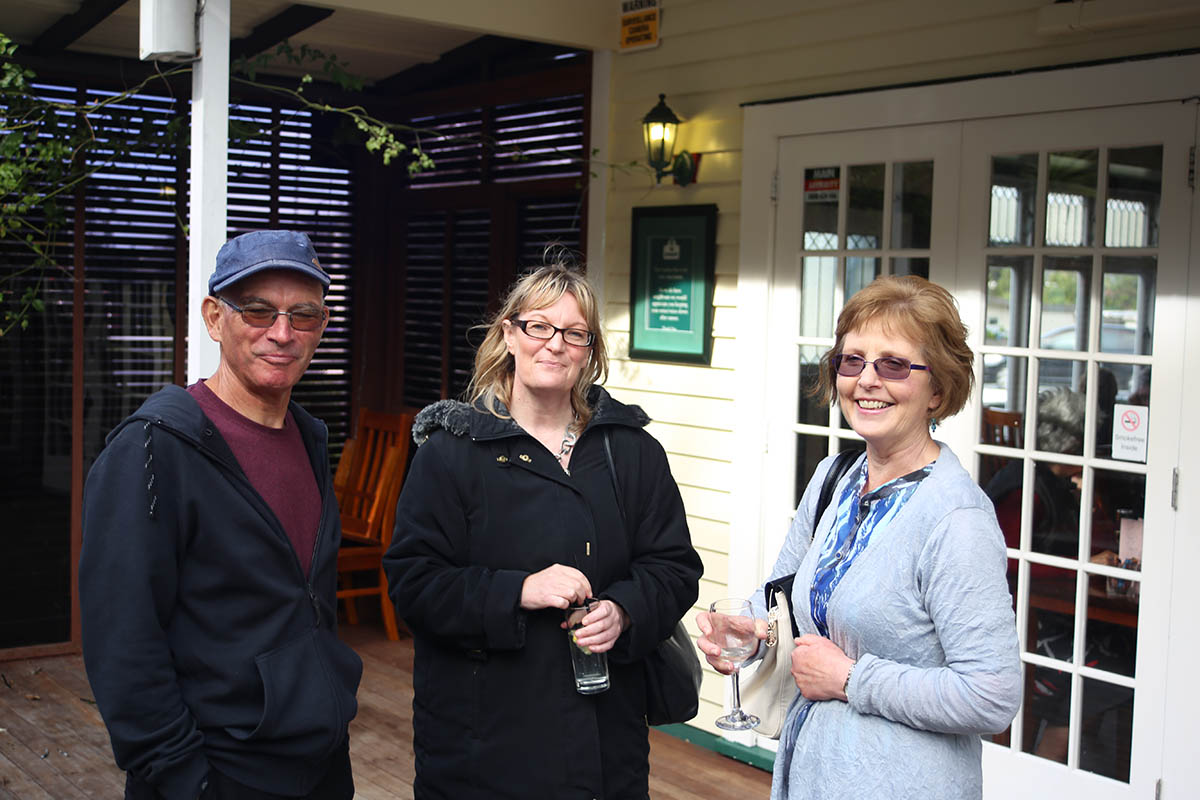
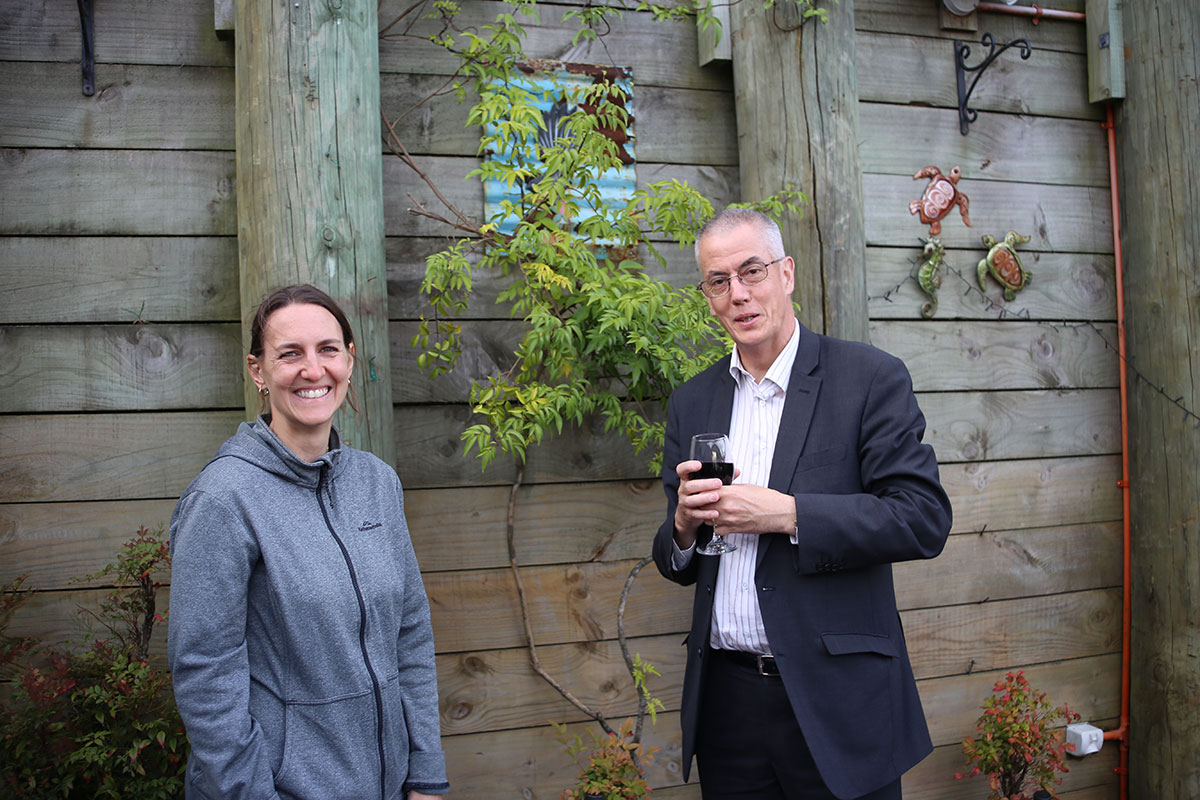
John Apanowicz was inducted as a member of Johnsonville Rotary on 27 February 2017. In the photo, looking on, are his Uncle and Aunt (Bruce and Margaret Niven), and at the lectern is President Vince Adams-Schneider.

John is Margaret and Bruce Niven’s nephew (who both had, till recently, a long association with this club, Bruce as a member and Margaret as his partner). John lives and mainly works from home in Ohariu valley. He is a chartered accountant. His junior schooling was at Johnsonville’s West Park School. He was Johnsonville Rotary’s Outward Bound candidate in the 1990s and gave the club a talk on his experiences then. He is very community minded. He serves on the Ohariu/Makara community board, he also has a role at Te Papa and an art school trust in Wellington. He has helped with the Johnsonville Clean-up & the Makara beach clean-up.

The club members welcomed John: he is our newest member.

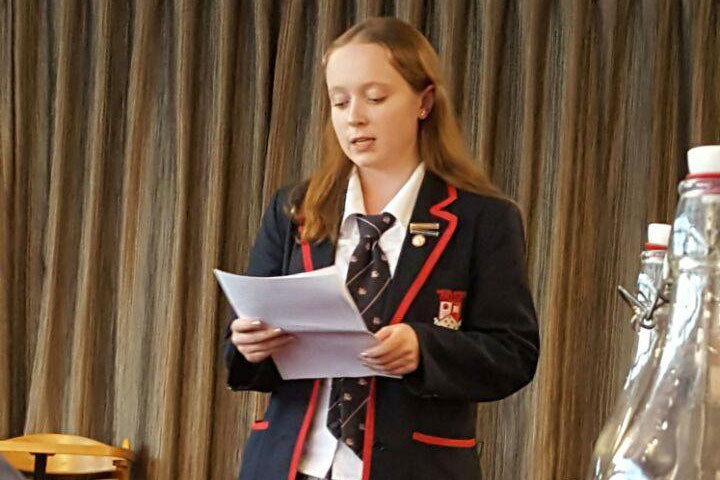
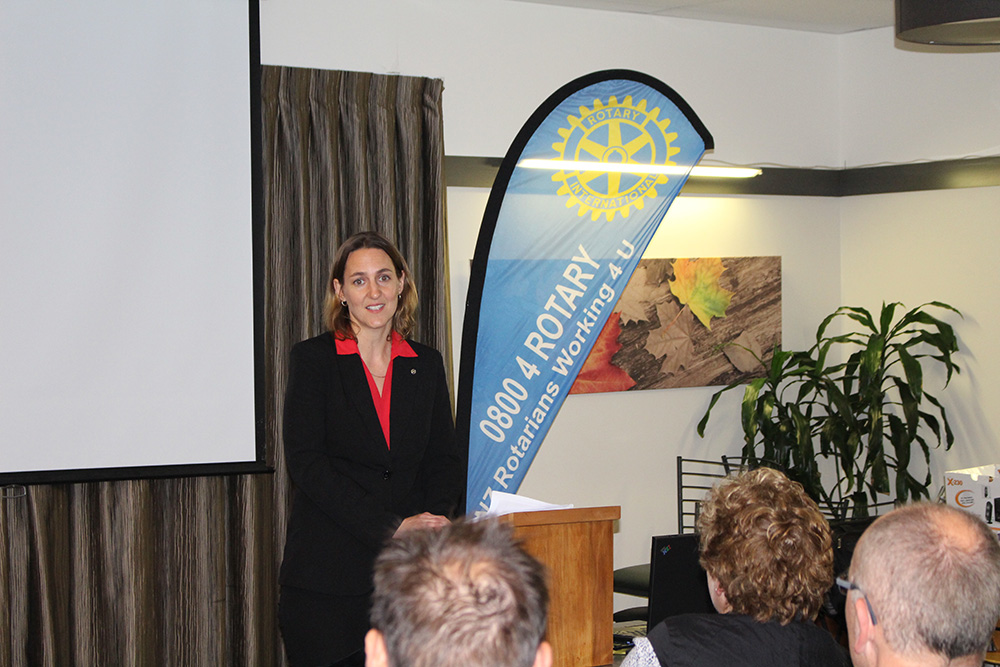
On 13 February 2017 Clarice du Toit, Johnsonville Rotary’s candidate, reported back on her attendance at the Rotary National Science and Technology Forum:

Clarice is currently a Year 13 student at Newlands College. From the 14th to the 28th of January, she attended the Rotary National Science and Technology Forum in Auckland along with 168 other students from all over New Zealand. The purpose of the Forum is to bring together like-minded high achieving Science students from diverse backgrounds from New Zealand and overseas, who all share a thirst to discover more. Over the two weeks, they attended lectures, visited businesses, Laboratories as well as several social events. They were exposed to fields of the Sciences that most of them had never heard of before the Forum, or that they didn’t before appreciate the importance of. To quote Clarice:

“In the Molecular Biology module, we were paired up and were given the instructions to remove some visible DNA from a Banana. We then followed up by repeating the same process with some of our own DNA. We found that the DNA from the banana was longer than our own, and we were shocked to discover that we, as humans, share about 50% of our DNA with a Banana. At Massey University, we had the Robotics module. We were taught a new type of Algebra and used it to make a robotic car that is able to sense its surroundings and maneuver through a maze un-aided. I enjoyed this module quite a lot, as it involved using Math in combination with creativity and logic, to create something that can function on it’s own. Computer aided design involved using a computer programme that can be used as a design tool for 3D printing. One of the most interesting things we learnt about was how 3D printing was being used to design implants that are customized to each person. Bio-printing is the type of 3D printing that is used to print tissues using stem cells to make noses, ears and fingers.

On the second day of the Forum, we received one of the most influential and eye-opening presentations of the entire Forum. As the director of Nanogirl Labs, Michelle Dickinson works with Nanotechnology to develop new types of devices and tools in the Biomedical field of Engineering. For example; she has recently been working with geckos and the way they stick to surfaces, as to mimic it and use it on the ‘hands’ of medical robots in order to make it easier for the robots to handle and pick up tools. She explained: “Science isn’t just a subject, it’s a journey of discovering how the world works”. That talk alone, was enough for me to see that there was a whole world that I hadn’t even thought about exploring. Already my choice of career was starting to shift, and it was only day two.

On the last Friday, I was fortunate enough to be one of the 20 students who went to the Headquarters of Fisher and Paykel Healthcare. My favourite part of this visit was the task of re-designing a Nasal Cannula, which administers oxygen to infants, in a way that solved the problems that were present in current designs. We also were given a tour of the factory floor, and some of the areas where the medical technology is designed and developed. After that visit, I feel excited and inspired because there is now a clear idea in my mind about what type of career I can see myself having and how that career can help me to make an impact in the world of Science.

My experience at the Forum has pointed me in the direction of Engineering, specifically Biomedical Engineering. Not only have I made lifelong friends, but I have met people who are doing incredible things in our world, and who have encouraged and inspired me to do the same. It was an unforgettable experience that challenged me and encouraged me to grow as a person. I will forever be grateful to Rotary for the chance to have had an experience that has shown me how I can make a difference in the world.”

On 13 February 2017, Sarjon Warde was the guest speaker at Johnsonville Rotary. Sarjon, a Red Cross resettlement officer, spoke on “Resettlement of refugees in New Zealand”. This was particularly pertinent given NZ’s recent intake of refugees from the Middle East.

Sarjon is from Mosul in Iraq and, as a result, speaks both his own home language (Assyrian), and other languages such as Arabic, which is most helpful dealing with refugees from the middle east. His father was an English teacher, which gave him his English skills.

The refugees coming to New Zealand via the UN, are first selected by the UN and if picked are offered the option of going to NZ or elsewhere. Once they arrive in NZ they are accommodated at the Mangere Centre in Auckland, where they receive health checks, orientation to NZ life and other assistance to make their later transition to NZ life easier. Sarjon (and other resettlement officers) will usually make first contact with the people for resettlement in Auckland at the Centre, to get to know them and make their arrival in their final destination less traumatic. When a refugee family arrives in say Wellington, Sarjon meets with them and they are settled into their new home and linked up by him with other government and NGO support services (social welfare, work and income, etc). Sarjon does follow up visits to assist their integration into NZ society.

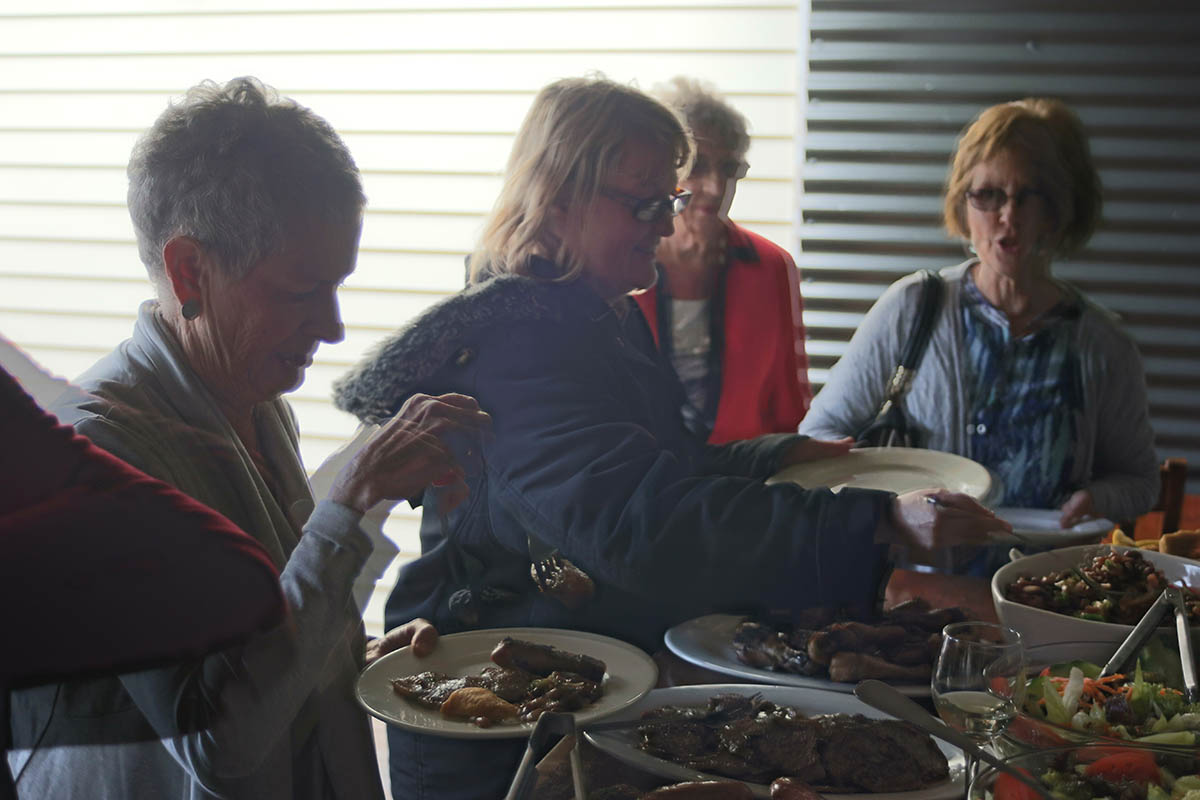
On Sunday 29 January 2017, Johnsonville Rotary had its annual BBQ at the Roundabout in Tawa.
We had 34 adults attend plus some of our children, for fun & games, fellowship and good company, and great food. Despite the wind getting a bit chill and gusty at times, a good time was had by all, as the photos show.

On 14 November Johnsonville Rotary had two speakers at the club meeting. First: Rosie McRobie, our successful Outward Bound candidate, reported back on the course and how enriching she found it, and thanked Johnsonville Rotary for sponsoring her to Outward Bound.


Second: new club member Candice Hurter gave her new member talk to the club, introducing herself, giving her fascinating background to the club and the reasons why she was motivated to join Johnsonville Rotary.

On 17 October 2016, Johnsonville Rotary had as guests the Johnsonville Lions.

The guest speaker was Lt Commander Kelly Begg of the Royal NZ Navy (RNZN).

Kelly joined the NZ Navy in 2001. She explained how the Navy has developed over the years and become increasingly gender neutral. The Navy became the RNZN 75 years ago (prior to that it was part of the British Royal Navy). Women were first enrolled with the navy during WW2 (as Wrens), for things like typing and signals, but largely cut back after the war. In the 1960s the Wrens were re-formed and became an official part of the navy. The navy became far more inclusive of women from the 1980s, and the Wrens were fully integrated into the navy. The RNZN became the most progressive part of the defence services, but women were excluded from conflict roles and zones initially. This changed in the 1990s when women could act in all roles, and went to conflict zones like the Persian Gulf. New ships are now designed for both sexes.

These changes have been reflected in Kelly’s career in the navy. This has taken her to Saudi Arabia with the Governor General (she was the only woman in a group of 3000 at the gathering they attended), 6 months doing logistics at Bagram base in Afghanistan, and doing naval drug patrols off East Africa.
Kelly is now Director of recruiting for the RNZN. They took around 700 of the approximately 12,500 applicants for the Navy recently. Women now make up 22% of the navy personnel and occupy all major positions in the Navy.

On 10 October 2016, Johnsonville Rotary hosted a club raid by Plimmerton Rotary accompanied by their female French Rotary Exchange Student, Laurie.

Laurie introduced herself to the club, with a brief resume. She comes from Amiens in France. The photo shows her addressing the Rotarians.

Our guest speaker was Shane Harmon, the CEO of the Westpac Stadium Trust (which manages Westpac Stadium): see photo. Shane left Ireland 21 years ago, to take up a position in Australia. He became involved with the 2003 Rugby World Cup, promoting it and selling tickets to it. $200 million was taken in ticket sales. Since that he has been heavily involved with rugby in Australia and New Zealand. When he was offered the CEO position at Westpac Stadium, he jumped at the chance to try something new and the lifestyle he and his family could have in New Zealand. He & his family love it here.

Shane has worked and is working on a vision to improve Westpac Stadium for its users and stakeholders like the Regional Council. It is now playing a bigger role in the area, it has improved marketing and is interactive with its clients and the public, via social media. Many more activities are hosted there, and it has the biggest events calendar in NZ. 69 events are scheduled for this year. This fills hotels and other venues in the Wellington region. The Stadium is in good financial health.
The Stadium Trust is spending $200 million on improvements to the Stadium, ranging from completely new turf in December, to new see-through cladding (to enjoy the view), so it will actually no longer look like a cake tin.

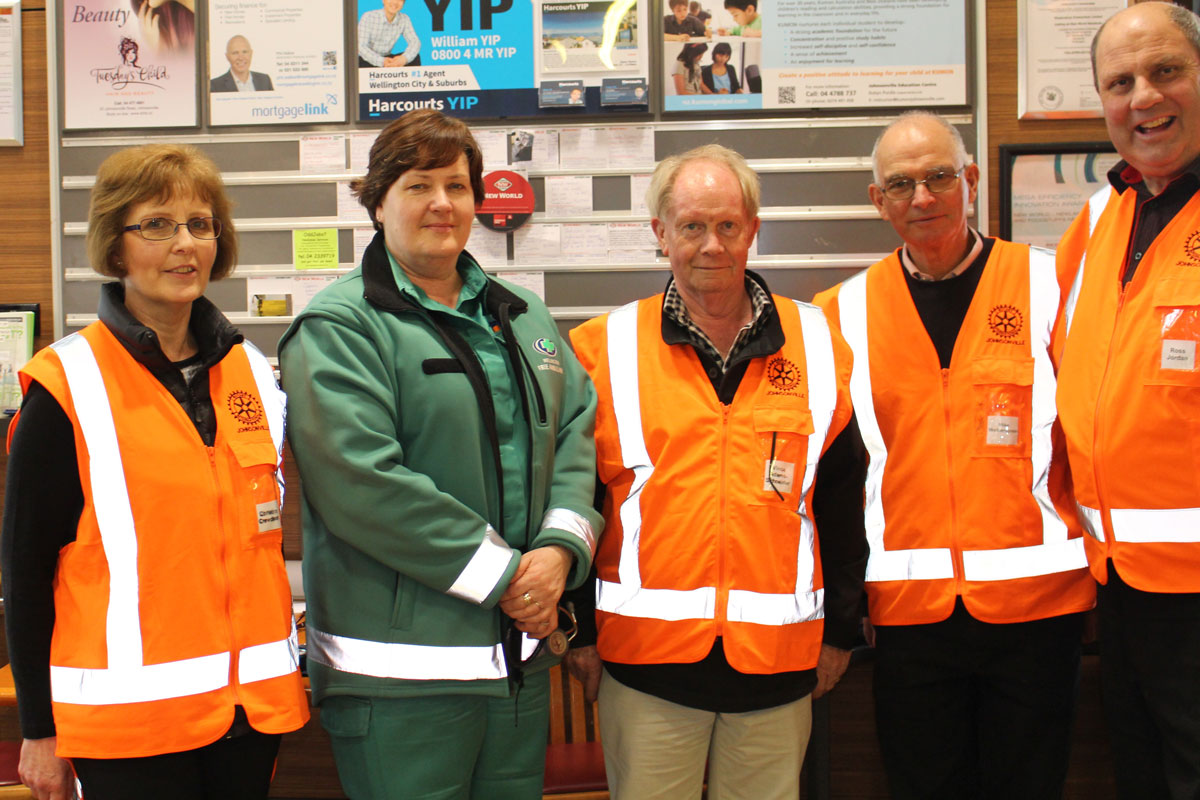
Wellington Free Ambulance, in association with the Stroke Foundation and with the assistance of Johnsonville Rotary, ran a Blood Pressure Campaign, at the New Worlds in Newlands and Churton Park, to check peoples’ blood pressure and bring home to everyone the importance of checking one’s blood pressure for good health and avoiding strokes.

The campaign ran from 10 am to 2 pm on 3 October 2016. 85 people were checking in Newlands and 125 in Churton Park.

Apart from the serious side (and some do have reasons to go on for further checks), there were lots of smiles and appreciation from the community for this free service and advice.